Where ancient history and Mediterranean sunshine meet on two wheels — self-guided cycling holidays across Greece's islands, mainland and coastal paths.
Highlights
- One of Europe's longest cycling seasons — rideable from March through November
- 14,000+ km of coastline with quiet roads even in peak summer
- Over 6,000 islands and islets — many connected by bike-friendly ferries, making island-hopping part of the ride
- Mainland interior is 80% mountainous — dramatic terrain for riders who want more than coastal cruising
Bike Tours & Cycling Holidays in Greece
Where ancient history and Mediterranean sunshine meet on two wheels — self-guided cycling holidays across Greece's islands, mainland and coastal paths.
Highlights
- One of Europe's longest cycling seasons — rideable from March through November
- 14,000+ km of coastline with quiet roads even in peak summer
- Over 6,000 islands and islets — many connected by bike-friendly ferries, making island-hopping part of the ride
- Mainland interior is 80% mountainous — dramatic terrain for riders who want more than coastal cruising



Plan with a cycling expert
Free advice from a team that knows these routes inside out - real people, not a bot

Cycling in Greece
Greece looks deceptively simple to plan — warm weather, quiet roads, beautiful scenery.
The reality is more nuanced. Ferry timetables between islands change seasonally. Road quality varies significantly between regions. And the difference between a well-sequenced Peloponnese itinerary and a poorly planned one can be the difference between riding through ancient Olympia at golden hour and arriving in the dark after a wrong turn on an unmarked mountain road.
Greece has been part of our portfolio since the beginning. We know which Cyclades islands reward a full day's riding and which are better as a lunch stop. We know the Peloponnese roads that satellite navigation gets consistently wrong, and which stretches of Crete's southern coast are worth the extra stage to reach.
Every tour we plan for you includes:
Detailed self-guided itinerary with route notes and daily stage information
GPS tracks and a navigation app loaded before you leave
All accommodations booked, with breakfast included
Daily luggage transfer between hotels
Bike rental delivered straight to your first hotel
24/7 support from our team throughout your trip
You ride. We handle everything else.
Still have questions? Get in touch or book a free consultation with one of our cycling specialists.

Hassle-Free
We take care of route planning, accommodations, luggage transfers, and all logistics, so you can focus purely on enjoying your ride.

Tried & Tested Adventures
Our cycling routes are hand-picked & tested, to ensure breathtaking landscapes, smooth roads, and maximum safety - giving you the perfect ride every day.

Unbeatable Support
Our 24/7 customer support is where we show our passion, ensuring your cycling holiday runs smoothly and your well-being is always our top priority.

Book with Confidence
We are a financially protected company, fully bonded and insured, keeping your money safe and allowing you to travel with confidence.

Local Experts
Our professional cycling guides in select locations know the local terrain and are trained to make this once-in-a-lifetime opportunity both safe and enjoyable.
Where Ancient History Meets Open Roads
April–June and September–October are the finest months — warm, sunny and uncrowded. May is arguably the best single month: 14 hours of daylight, temperatures around 22–28°C, and the sea warm enough for a post-ride swim.
July and August are hot inland — early starts are essential.
The Meltemi wind blows strongly across the Aegean in midsummer, which can make island routes challenging on exposed stretches.
Most cyclists come expecting coastline — and leave surprised by how much else there is:
The Peloponnese — ancient Olympia, Sparta, Mycenae and Byzantine Mystras, all linked by quiet olive-grove roads
Crete's interior — mountain gorges, Minoan ruins and villages that see very few tourists even in peak season
The Ionian Islands — greener and gentler than the Aegean, with Venetian harbors and pine-covered hills
The Cyclades — whitewashed villages, volcanic ridges and ferry crossings between each stage
The Peloponnese is Greece's most rewarding mainland cycling region — a peninsula where ancient history appears at almost every turn.
Quiet backroads connect Mycenae, Epidaurus, ancient Olympia and the Byzantine fortress city of Mystras, all within a single multi-day tour.
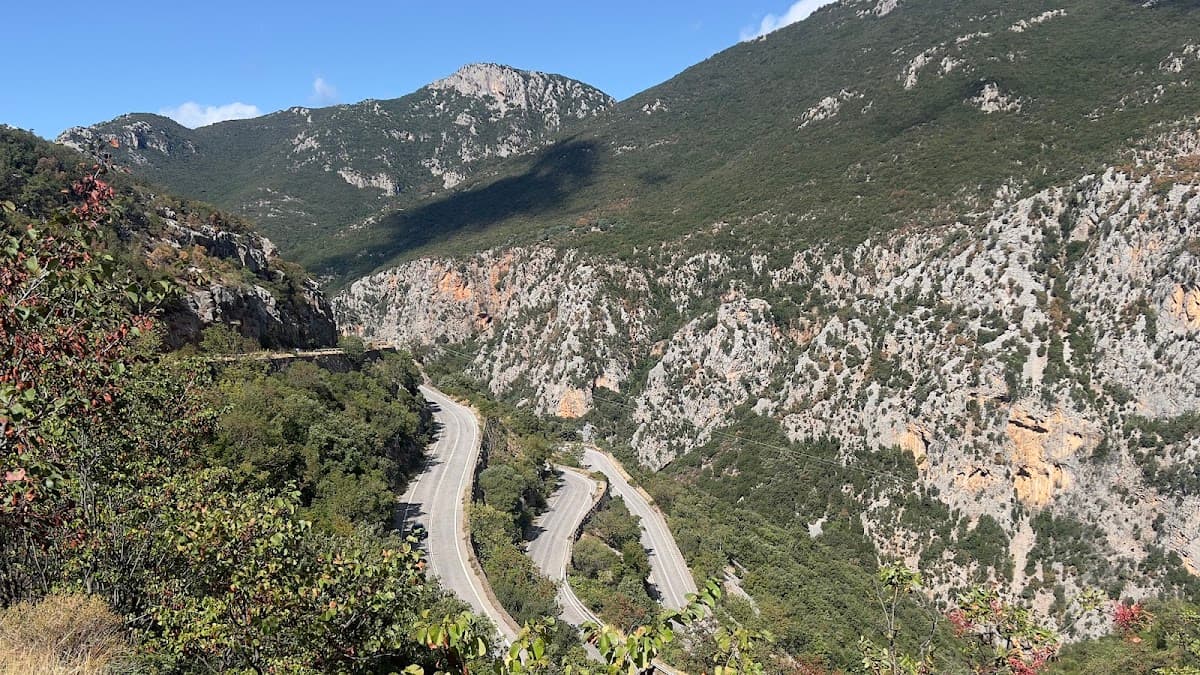
Terrain ranges from rolling coastal roads near Kalamata to serious mountain climbs in the Taygetos range. Mostly low-traffic, well-surfaced and genuinely uncrowded even in summer.
Road quality varies — coastal highways are excellent, mountain roads more mixed. Our routes favour quiet back roads throughout
Traffic is light outside major towns, even in July and August on most island routes
English is spoken widely across all tourist areas and islands
Greece uses the euro; carry some cash on smaller islands where card payment is unreliable
A cycling holiday in Greece is also a food holiday — whether you intend it to be or not.
Tavernas appear at the end of almost every day's riding: fresh grilled fish, slow-roasted lamb, local cheeses and honey at tables overlooking the sea.
Olive oil here isn't a condiment — it's a foundation. The Peloponnese produces some of Greece's finest, pressed from groves that line the cycling routes.
A cold Mythos after a long stage is one of the better ways to end a day in the saddle.
Explore the best of Greece’s offering in our cuisine guide →
Greece's largest island is big enough to deserve its own week. Routes cross from the dramatic White Mountains in the west through olive-covered plains and ancient Minoan sites to the quieter Aegean south coast.
Road quality is excellent across most of the island, traffic is light away from the north coast resorts, and the variety of terrain — coastal flats, mountain passes, gorge roads — means no two days feel the same.